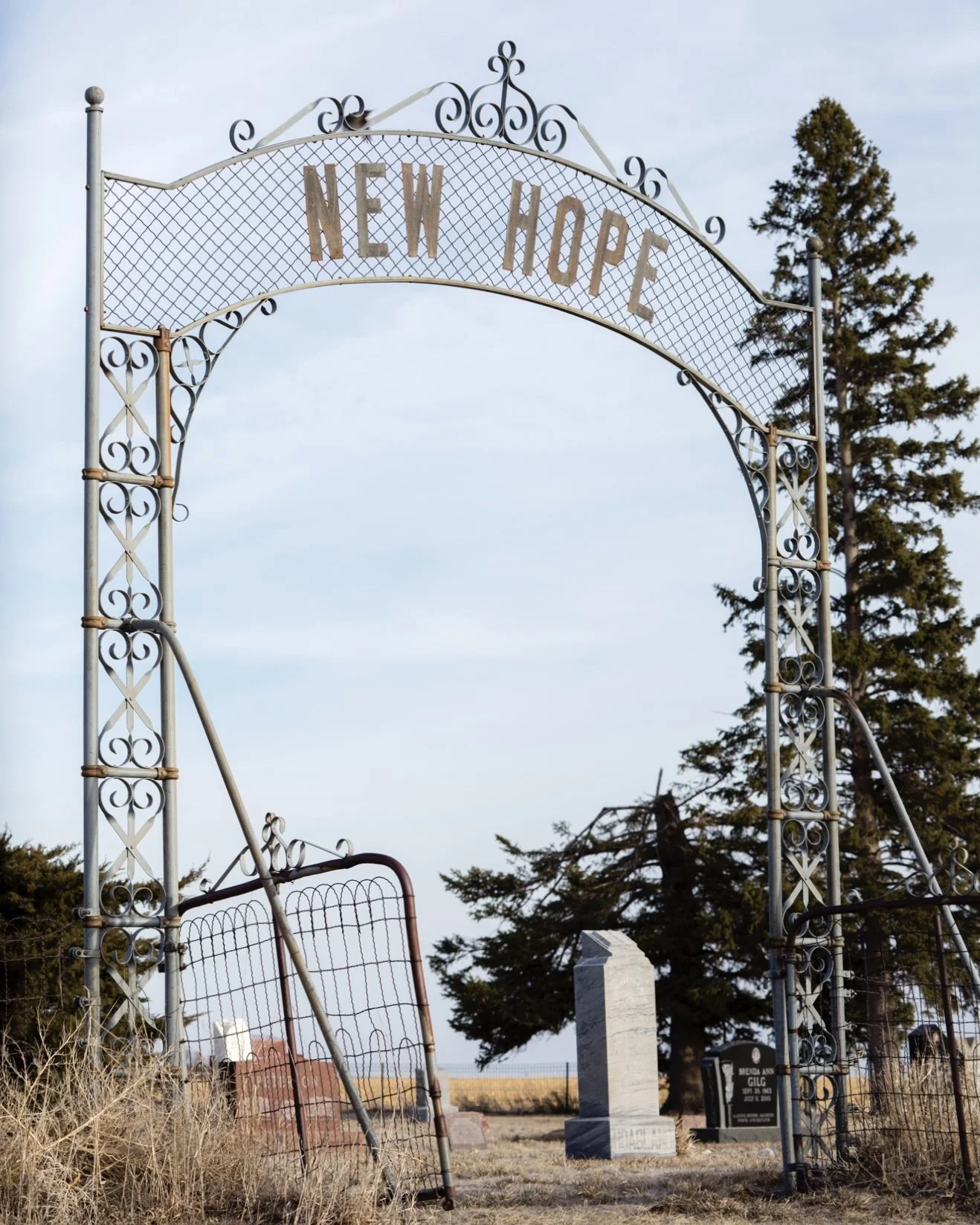
Written on the cemetery entrance, found in Dawson County, Nebraska

Dawson County, Nebraska

( 2011 - 2019 )
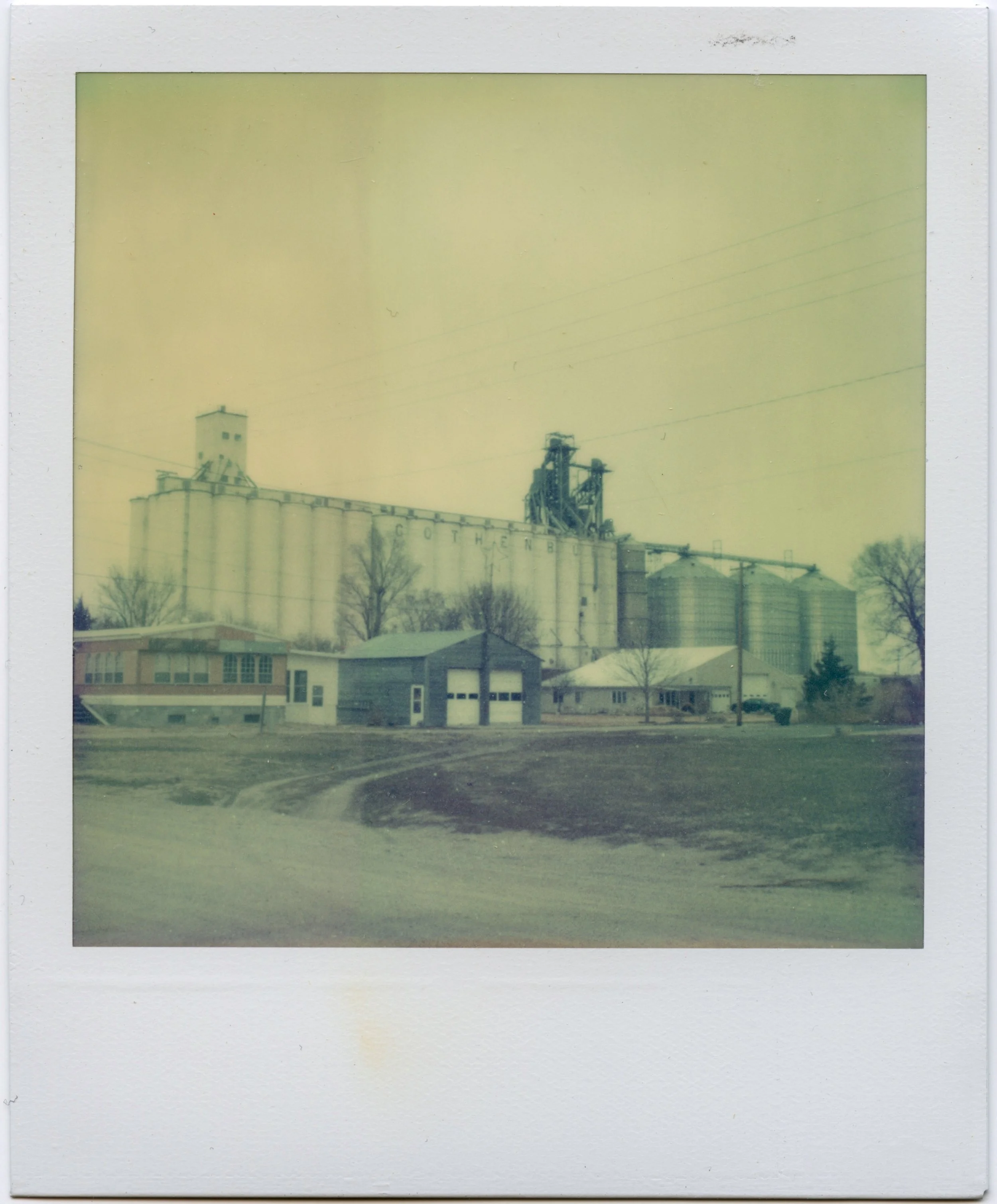
a polaroid of the grain elevator in Gothenburg, Nebraska.
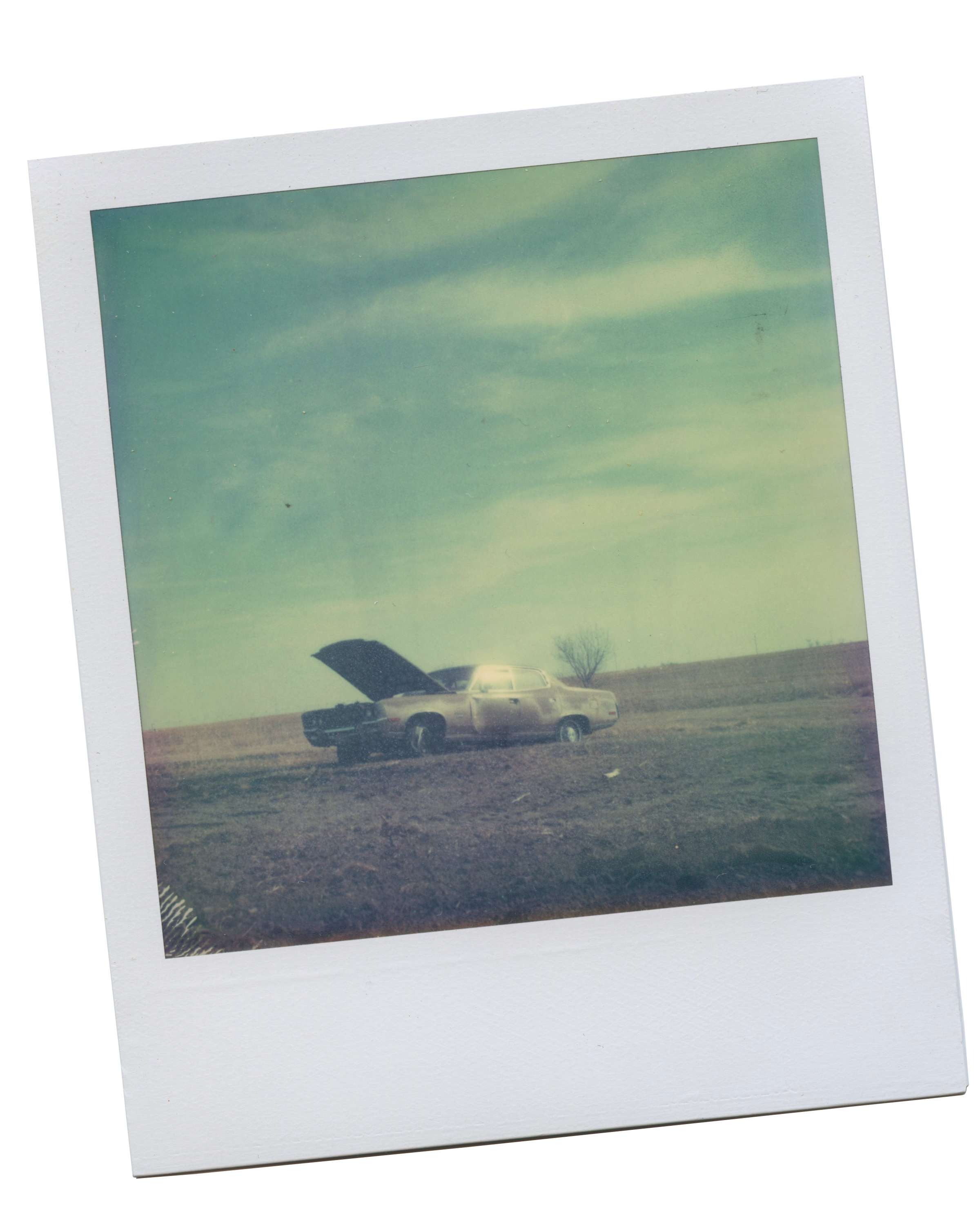
on the dashboard of the car is a blue book of matches that says thank you.
polaroid of a car in the middle of an empty brown field. The hood is up, and the sun is reflecting off of the window.
a controlled burn in the next county is visible from this rural intersection in Dawson County, Nebraska.
the sun sets through clouds of smoke from a controlled burn viewed from one side of a snowy highway overpass.
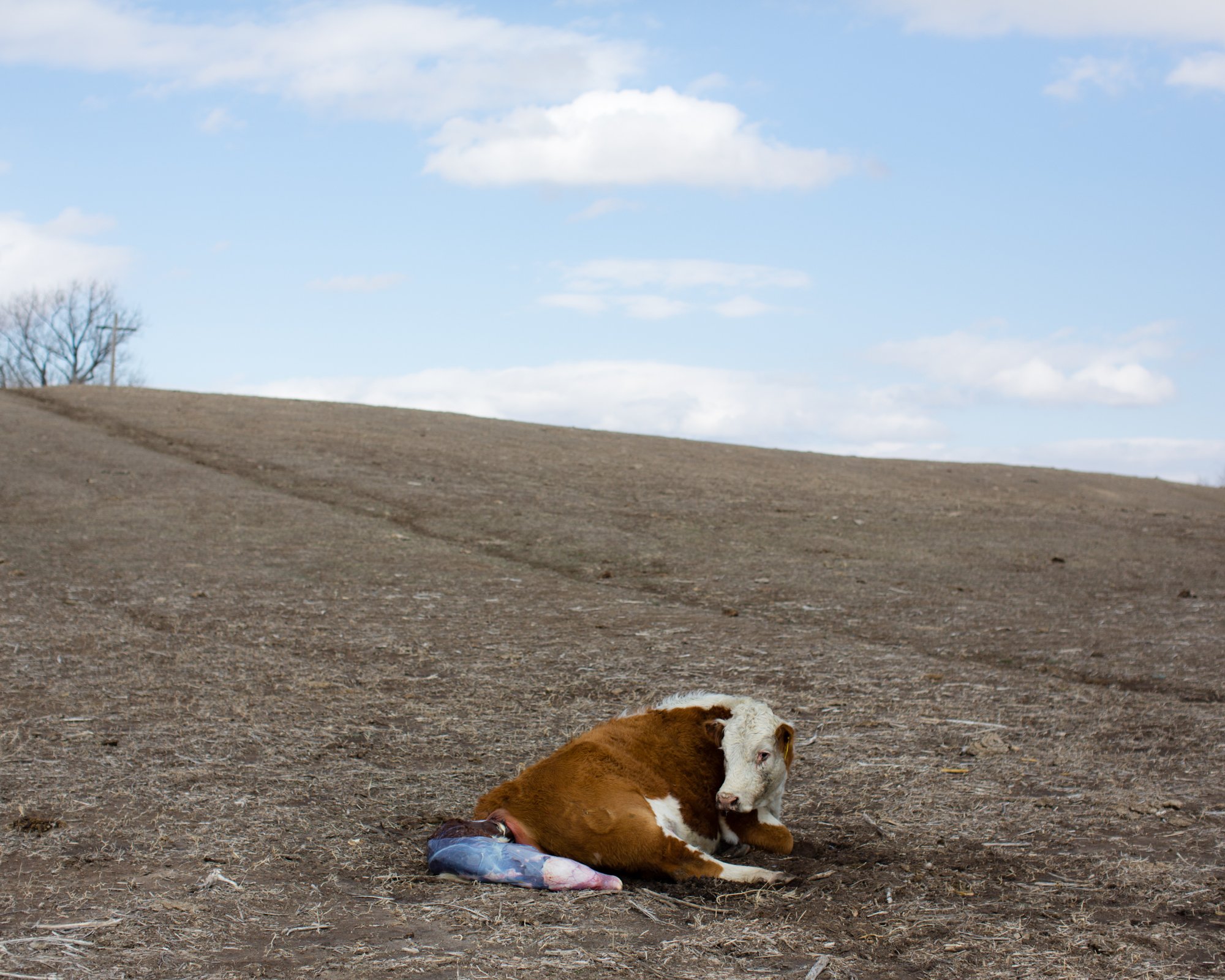
a cow delivers her calf on a clear day, in a barren April field.

As artists we must address our complicity in systems of colonial capitalism.

Land in Nebraska was first enclosed by waves of European settlers, stolen from its original stewards in “lawful” moves like the Homestead Act. This is how my family, came to farm in Nebraska.

This work intends to show us a mirror to the ways colonial capitalism has ruined the land, destroyed the lives and livelihoods of its original caretakers, and brought suffering to everyone inhabiting what is now known as North America.

Capitalism distorts the realities of exploitation in agriculture, it is important to not perpetuate this harm, and instead, to clarify the nuances of what it takes to put food on grocery store shelves. Franz Fanon teaches us that to be ethical practitioners, we have to be committed to revolutionary practice. That means not functioning as if capitalism or colonialism are natural and have always existed.
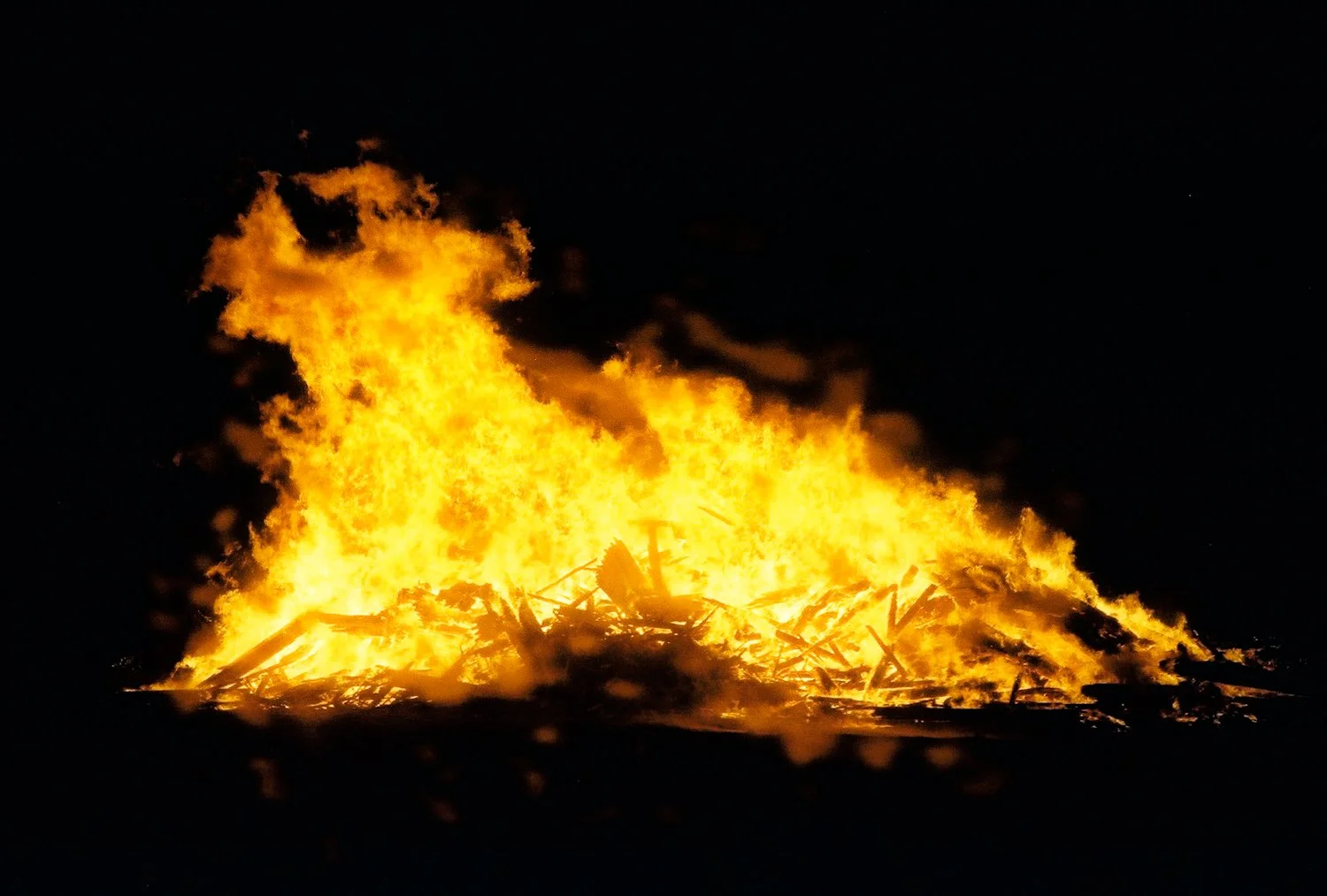
a 35mm image of a controlled burn happening at the grain elevator in Gothenburg, Nebraska.
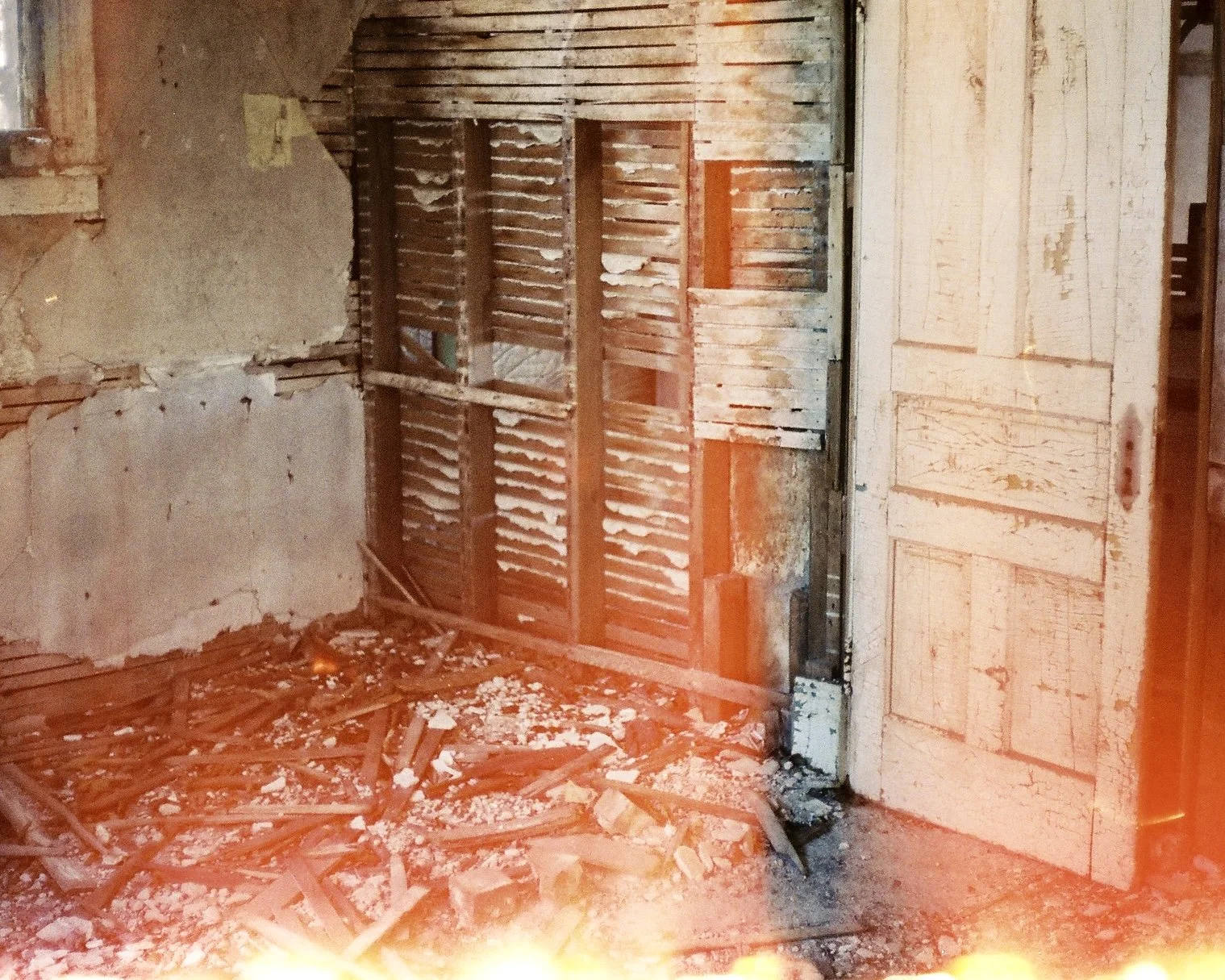
a camera glitch creates light leaks at the bottom of the image. The interior of an old wall has been partially dismantled, next to a door with no doorknob.
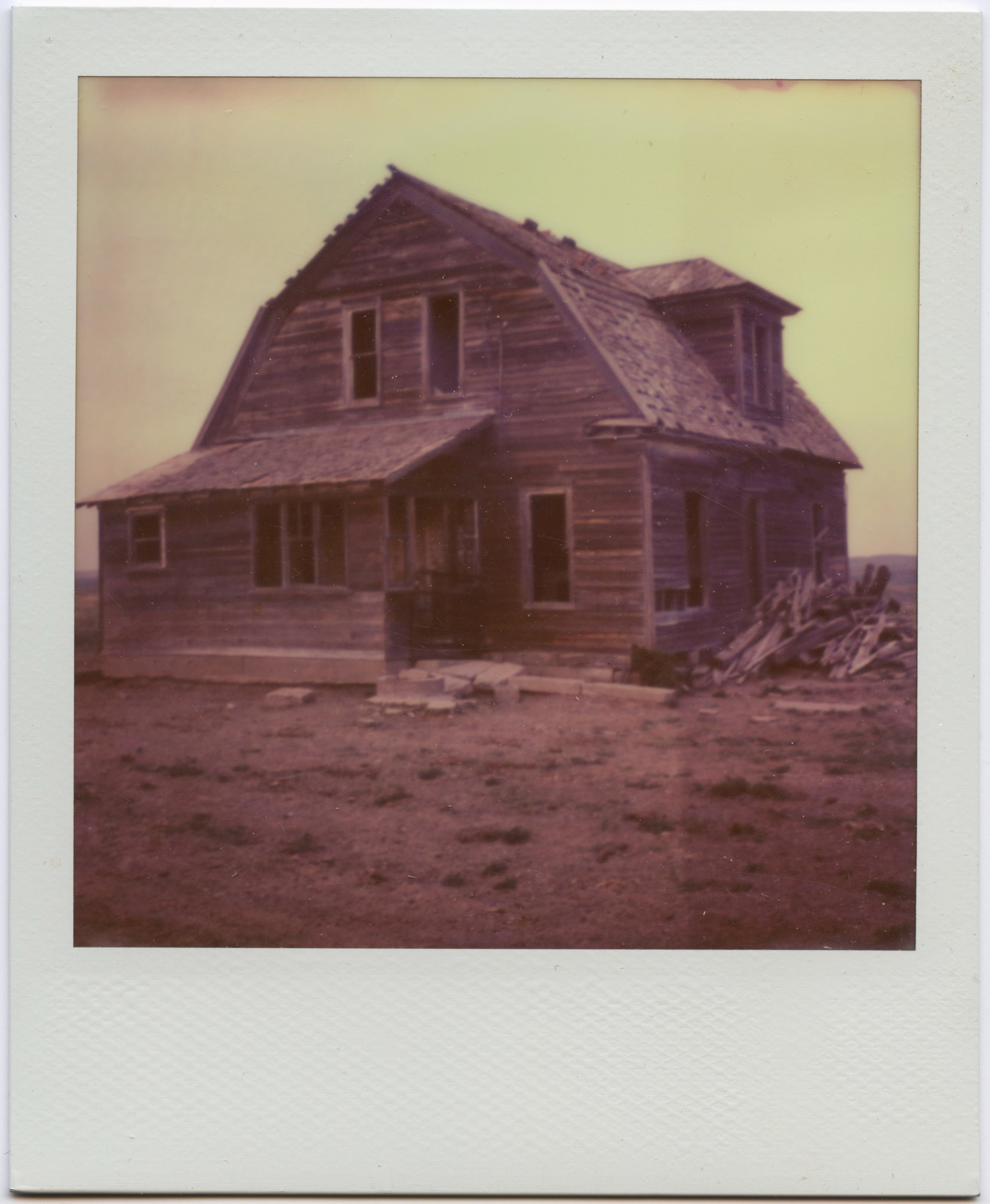
a polaroid of the exterior of an abandoned farmhouse, found in Dawson County, Nebraksa.
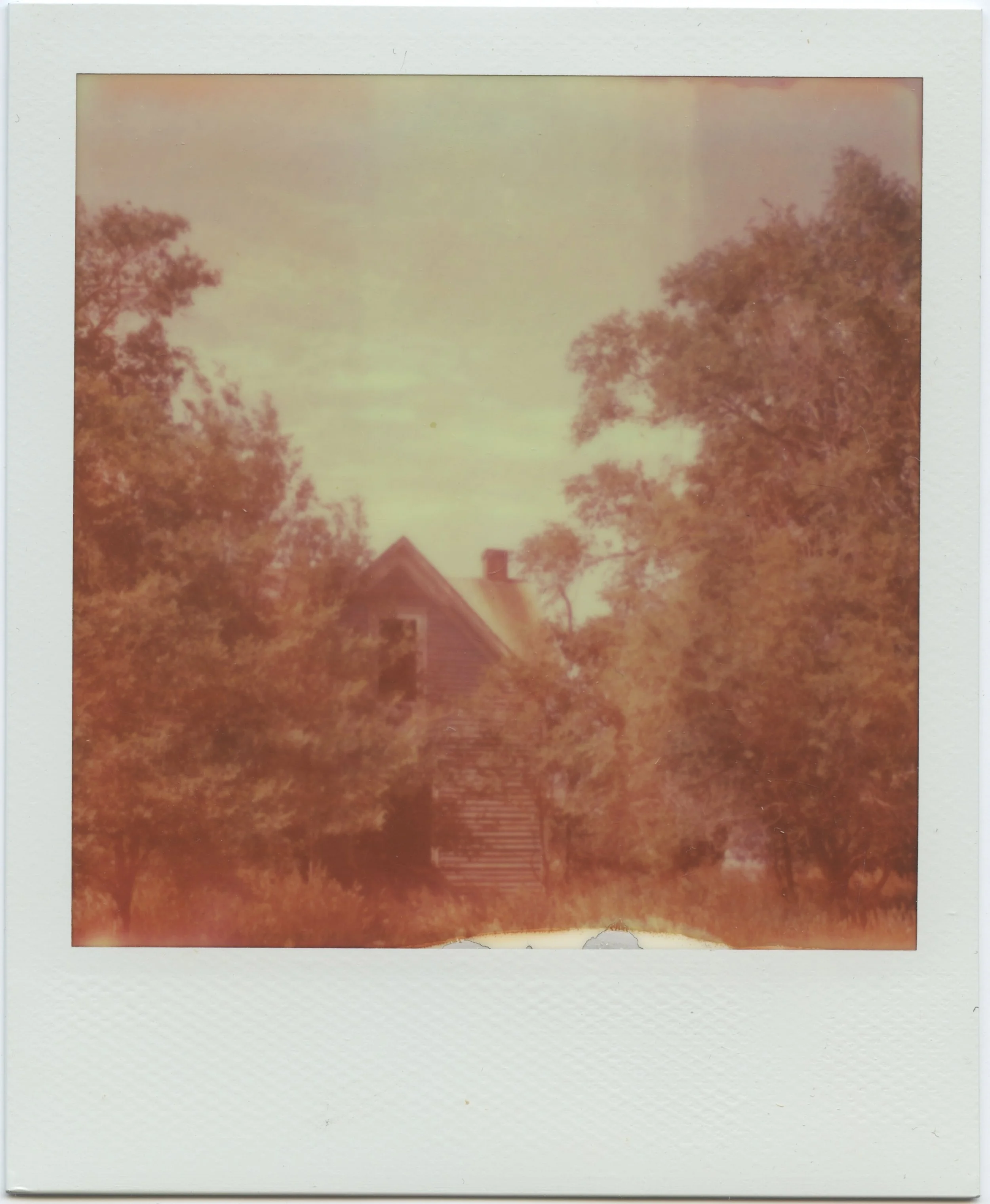
a polaroid of an abandoned farmhouse, peaking out from behind some trees. The house was painted blue, although the polaroid has made it appear orange.